
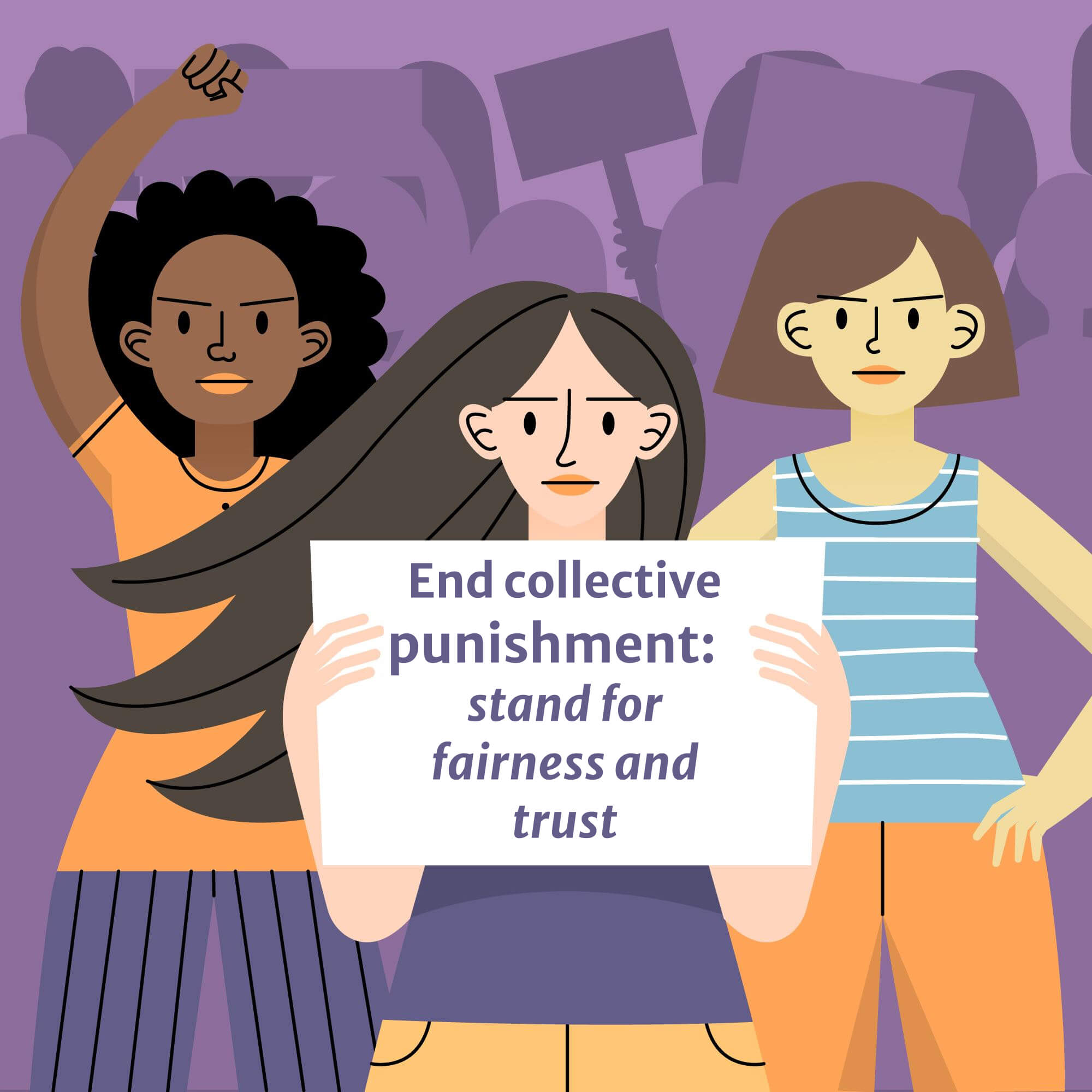
The phrase collective punishment might conjure images of authoritarian regimes or military retaliation—of innocent people punished for the actions of others, held accountable as a group rather than as individuals with rights, histories, and specific needs. But in British Columbia’s public schools, collective punishment is alive and well in the ordinary moments that define children’s daily lives: when recess is cancelled for the whole class because one child struggled to sit still; when entire groups are excluded from privileges because a teacher couldn’t identify a culprit; when reward systems like sticker charts are used to condition behaviour through peer pressure, shame, or group incentives, rather than through understanding or accommodation.
These practices are so common that many families assume they are normal. Many teachers, too, have been trained to believe this kind of enforcement is a necessary part of classroom management. But underneath these small, ordinary injustices lies a much larger truth: collective punishment is a symptom of an educational system stretched beyond capacity, stripped of the resources needed to meet children where they are, and caught in a cycle of moral injury and burnout.
When we talk about school funding, we must also talk about the conditions that funding produces—because those conditions shape how discipline is enacted, how harm is justified, and who is made expendable in the name of order.
See: What would it really cost to fix the problem?
Scarcity doesn’t just harm—it distorts
Underfunding is not just an economic problem. It is a moral and relational problem that alters what adults expect from children, what they are willing to tolerate, and how they explain the distress they encounter in their classrooms.
When there are too few educational assistants to support inclusion, children with disabilities are expected to self-regulate through force of will alone. When there are too few counsellors to meet escalating mental health needs, trauma is mistaken for disrespect. When schools cannot hire enough resource teachers, learners are blamed for being unprepared rather than supported to grow. And when the pressure builds beyond what staff can handle, discipline becomes a tool of survival—swift, blunt, and detached from the nuances of developmental difference or systemic cause.
This is how collective punishment takes hold: as a way to quickly suppress conflict, to protect the appearance of control, to restore a façade of calm in a system that has removed most of the supports that would make true calm possible.
See: Engineered famine in public education
Discipline policy is economic policy in disguise
No school board wants to frame its code of conduct as a cost-saving tool. But in practice, discipline often fills the gaps left by funding shortfalls. Instead of trained staff who can de-escalate or differentiate instruction, we get administrative procedures that describe how students should behave. Instead of invested relational support, we get surveillance. Instead of inclusion through infrastructure and staff time, we get exclusion rationalized as consequence.
In this way, the policies that govern behaviour mirror the same scarcity logic that has gutted services: they demand compliance from students while offering minimal structural support to ensure their success.
See: Why I’m reviewing school codes of conduct
Disabled children pay the highest price
When systems fail to accommodate individual needs, they begin to rely on generalised expectations. The result is that disabled children, neurodivergent children, racialised children, and those navigating trauma are disproportionately disciplined for failing to conform to what others perceive as normal.
These children are not failing—they are being failed.
They are punished for being overwhelmed, for asking too many questions, for taking up too much space, for withdrawing, for caring too deeply, for needing rest, for not masking well enough to survive. Their IEPs are ignored, their distress reframed as disruption, their emotional safety subordinated to the perceived needs of the group.
And when they stay home, broken and exhausted, schools quietly reframe the story—describing absence as choice, disengagement as indifference, and collapse as noncompliance.
See:
Ending collective punishment requires both money and moral clarity
Money will not end collective punishment by itself. A better-funded system can still rely on coercion if its culture remains unchanged. But without adequate funding, even the most well-intentioned educators will remain trapped in environments where exclusion is the default and accommodation the exception.
This is why we launched End Collective Punishment in BC Schools—a sister project to this site, built by the same parent, grounded in the same analysis, and committed to the same vision: a public school system where no child is punished for the failings of policy, where no family must choose between education and safety, and where discipline is never used to manage underfunding.
The site provides real examples of harm, searchable policy critiques, template letters, strategy tools, and a growing archive of lived experience and legal guidance. It is a place for families to learn, to act, and to resist the normalisation of harm.
See:
- Rethinking accessibility leadership, training, and labour in BC public education
- Resources for families
- Resources for educators
- Resources for decision makers
Join the movement: fund the future, and protect every child’s dignity
These two sites exist together because the problem exists together. Underfunding and exclusion are not separate stories. They are part of the same reality, playing out in classrooms every day. One site shows the economic roots; the other names the human cost. One offers a plan to fix it; the other refuses to let harm go unnoticed in the meantime.
If you believe in the right to education, to safety, and to justice—support both. Share these resources with your local PAC. Bring them to your school board. Send a letter. Tell your story. Insist on better.
Because every child deserves a classroom where they are seen, supported, and safe. And every public dollar should build that world—not punish the children who cannot hold it up on their own.