

apple and money symbol

Welcome!

This is a parent-led advocacy website designed to fight for adequate funding for BC public schools

Search education policy, advocacy tools, stories, and more below.

Student with head down and pile of books

The relationship between interest holder recommendations and government decisions

On:

|

,
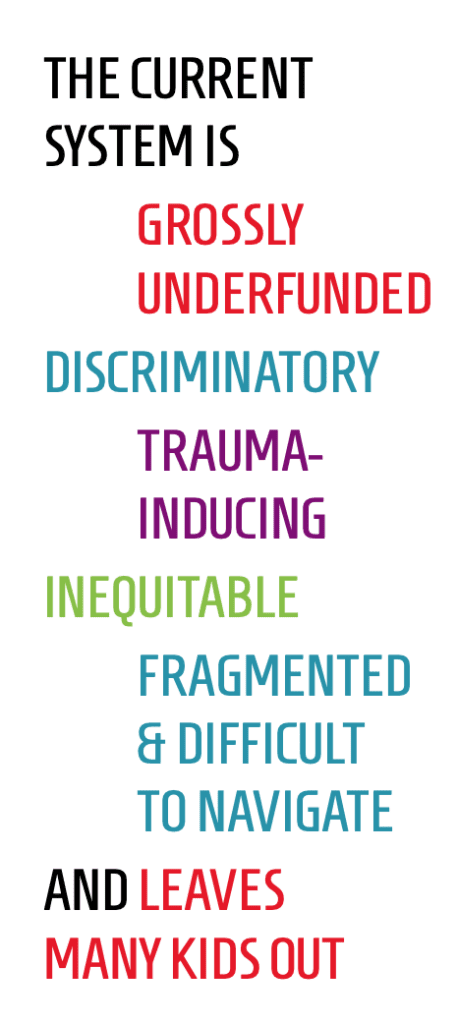
The current system is grossly underfunded discriminatory, trauma inducing and equitable, fragmented and difficult to navigate and leaves many kids out

The redesigned Children and Youth with Support Needs system announced on February 10, 2026, introduces two new direct-funding streams—BC Children and Youth Disability Benefit and BC Children and Youth Disability Supplement—plus an expansion of diagnosis-free community-based services over a multi‑year rollout. It also abandons autism funding that provided $6k funding per year to beneficiaries, regardless of autism functioning labels. When a decision like this happens and 1000s of parents flip out, seeing badly needed resources revoked, I get curious about what the original inputs from interest holders were into the decision. You can read them: https://www.bcdisabilitycollab.ca/mcfd . This is my gist, from a very rapid review.


What stakeholders universally called for

Across every report—from community-led engagement across 23 BC communities to clinical submissions from therapy associations, to lived-experience testimony from families raising children with complex medical needs—several core demands emerged with striking consistency.

BC Association for Child Development and Intervention (BCACDI) 

BC’s CYSN Service Delivery Transformation – Position Paper

  • Advocates for building on existing network of community-based non-profit Child Development Centres rather than disrupting proven services through procurement
  • Calls for transparent funding formula based on population data and prevalence rates, with sufficient equitable funding indexed to inflation
  • Proposes hybrid model maintaining individualized autism funding while implementing needs-based behavioural support contracts through community agencies
  • Emphasises multi-disciplinary team-based approaches leveraging CARF-accredited organisations’ existing expertise, community relationships, and family-centred practice
  • Recommends robust human resources strategy including provincial recruitment lead, increased training seats for therapists, standardised wage grids across sectors

Individual funding has been in place in BC for children and youth with Autism for almost two decades, and is also available for some families of school aged children that qualify for certain programs. BCACDI acknowledges that for some this model works well, and doesn’t believe in taking anything away from families currently accessing funding in this manner. — BC Association for Child Development and Intervention (BCACDI) 

BC Complex Kids Society 

Beyond Survival: Recommendations for Transforming Support Systems for Children & Youth with Medical Complexity

  • Documents how 5,000+ children with medical complexity represent nearly 30% of paediatric healthcare costs but receive fragmented, chronically underfunded support unchanged since 1980s
  • Calls for rights-based, needs-based funding assuring every family access without waitlists, with family-by-family approach budgeted on evolving demand
  • Proposes community-based care coordination teams with nurse key workers as single point of contact, integrated across health, education, social services
  • Recommends Caregiver Benefit (up to $1,500/month like Quebec) or Certified Nursing Assistant program compensating family caregivers for specialised labour
  • Advocates for funding home and vehicle accessibility, portable services across regions, extended support to age 25, trauma-informed culturally safe practices
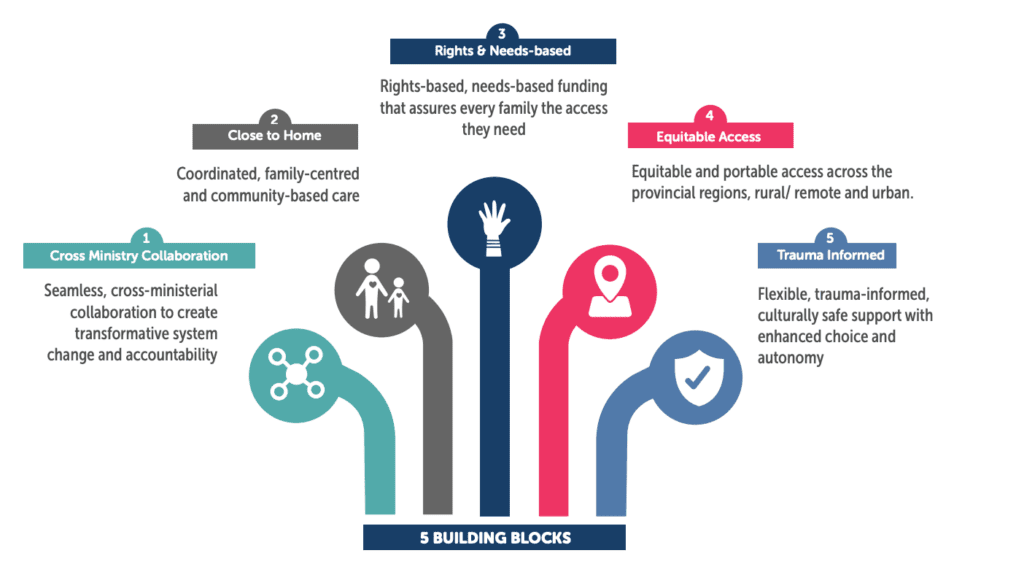
Building blocks diagram

BC Disability Collaborative 

A Family-Driven Model of Care: Setting the Table for Disability Rights in BC

  • Calls for family-driven care model centred on potential-based, abundance mindset, decolonised, trauma-informed, and culturally safe values
  • Demands adequate sustained funding with transparent formulas, quality workforce capacity, equitable access regardless of diagnosis or location
  • Advocates for human rights complaint recognising BC’s current treatment of children with disabilities violates Charter rights and UN Convention on Rights of Persons with Disabilities
  • Proposes unified “I am one of them” campaign highlighting 80,000+ children excluded from services annually
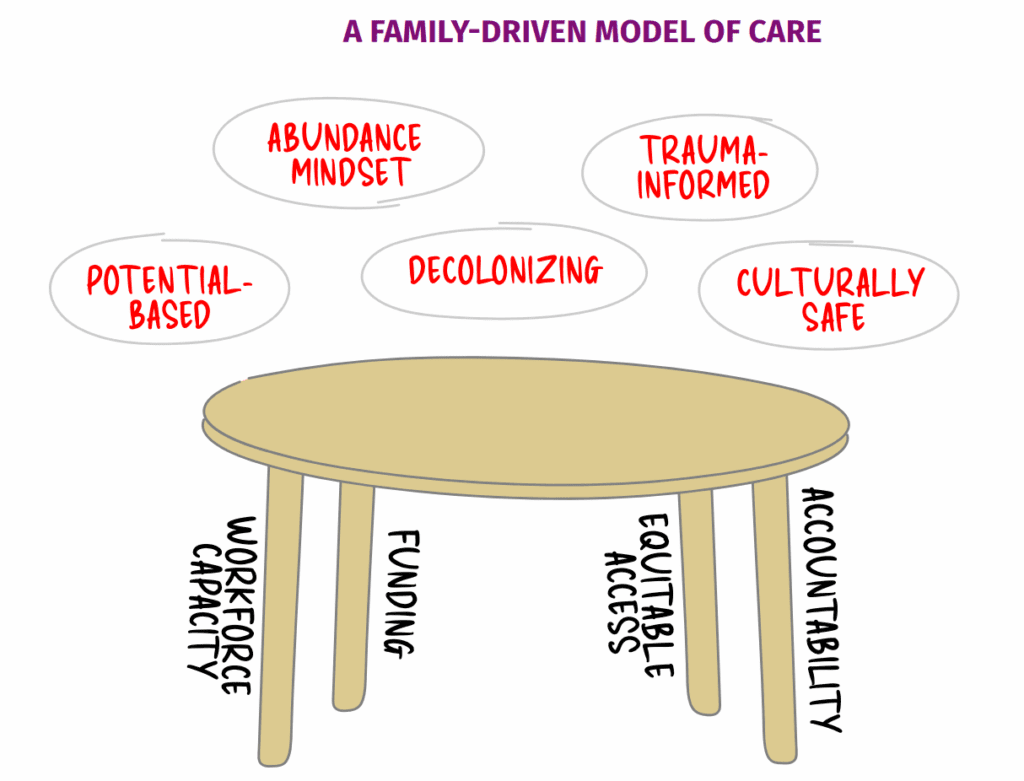
table showing foundations of a workable system
BC Disability Collaborative envisions a needs-based system built on potential rather than deficit, abundance rather than scarcity, decolonised decision-making, trauma-informed support, and cultural safety. Implementation requires sustained adequate funding, quality workforce capacity, equitable diagnosis-free access with family choice, and provincewide accountability mechanisms ensuring intended outcomes.

Community-Led Collaboration Project 

Invest in Communities: 11 Calls to Action

  • Represents engagement of 2,010+ people across 23 BC communities in community-driven conversations about needed supports
  • Calls for cultural safety prioritizing Indigenous, newcomers, refugees; fund translation services and cultural liaison workers
  • Demands adequate responsive funding based on community needs, population growth, geographic considerations
  • Advocates for flexible respite meeting unique family needs, eliminating therapy waitlists through workforce recruitment
  • Emphasises access to mental health supports, inclusive child care, meaningful education with supported teaching teams

“Over two years, more than 130 organizations across B.C. came together to speak with over 2,000 people about their experiences and ideas when it comes to supports and services for children and youth with disabilities and support needs.

The result of these conversations is two-fold: a vision for all children and youth to achieve their fullest potential and thrive in community, and 11 calls to action with specific recommendations to make this vision a reality.”

Down Syndrome Resource Foundation 

DSRF MCFD Engagement Report

  • Documents that children with Down syndrome receive no financial or therapeutic support based on diagnosis alone despite universal need
  • Demonstrates value of specialized support: 93.1% of families identified Down syndrome-specific knowledge as critical to success
  • Calls for funding beginning at birth for all individuals with Down syndrome, continuing across lifespan without arbitrary cutoffs
  • Recommends hybrid model allowing family choice between individualised funding or centre-directed funding through DSRF
  • Advocates for specialised services incorporated into schools, addressing inadequate educational support reported repeatedly

Family Support Institute of BC & UBC Canadian Institute for Inclusion and Citizenship 

Family Voices Project: Report of Community Engagement

  • Documents how families must become expert advocates, navigators, and case coordinators just to access fragmented services, with devastating impact on family wellbeing
  • Emphasises need for family agency, choice and control through individualised funding models that allow families to select providers and determine service timing
  • Calls for systemic change including reduced social worker caseloads, inter-ministerial coordination, navigator roles independent of ministry gatekeeping
  • Highlights geographic inequities leaving rural families without services, cultural safety gaps for Indigenous families fearing child protection surveillance, and need for needs-based rather than diagnosis-based eligibility
  • Recommends family-centred approach supporting entire household including siblings and caregivers experiencing burnout
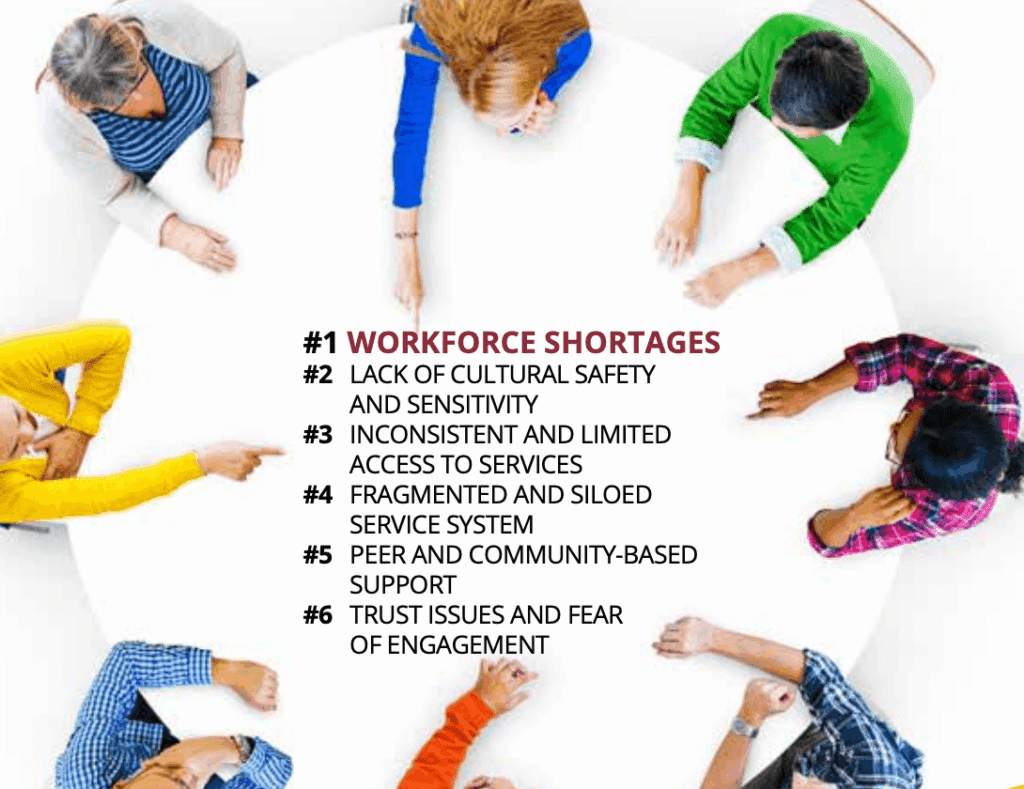
People around table pointing out problems

FSI did research with 46 individuals around the province. Families described painful impacts of fragmented CYSN systems: emotional/financial strain navigating complexity, waitlists, advocacy burdens. Indigenous and equity-deserving communities face culturally unsafe services compounded by colonial legacies. Participants demand family-centred investment including caregiver/sibling supports, trust-building, choice/control, adequate funding, workforce capacity addressing rural/urban shortages, coordinated cross-ministry continuity from early intervention through adult transitions, navigator roles reducing navigation burden.

Health Sciences Association of BC 

Building on What Works – Child Development Centres and the Future of CYSN Services

  • Calls to stop competitive tendering/RFPs that risk privatisation, immediately increase CDC funding by 50% minimum
  • Documents moral distress and burnout from grossly inadequate staffing: 0.7 FTE OT for 120 children, 1.0 FTE SLP for 140 children
  • Advocates enshrine not-for-profit delivery in legislation, move CDCs to Ministry of Health, develop population-based funding formula

Physiotherapy Association of BC 

MCFD Children and Youth with Support Needs Engagement Project

  • Highlighted the central role of early, consistent therapy access (e.g., physiotherapy) in maintaining developmental gains, warning that funding instability risks regression and increased long-term need.
  • Emphasised that service delays and waitlists worsen when funding becomes pooled or centrally allocated, disproportionately affecting children with complex or evolving physical needs.
  • Identified the importance of clinically driven decision-making (not administrative caps) to determine therapy intensity, reinforcing family concerns about loss of individualised funding flexibility.
  • Stressed that families require predictable funding continuity to maintain therapeutic relationships and progress, especially for children with lifelong physical disabilities.
  • Noted that effective outcomes depend on interdisciplinary coordination (physio, OT, speech, school supports), which can fragment when funding is reorganised across agencies.
  • Raised concerns that changes to funding structures must not undermine function, mobility, and participation goals, which families consistently prioritise for quality of life.
  • Reinforced that equitable access requires geographic parity, since rural families already face limited therapist availability and would be further disadvantaged by centralised funding controls.

Reciprocal Consulting 

MCFD CYSN: Community Engagement Report on the Development of a System of Services for Children and Youth with Support Needs

  • Brought forward the voices of underserved communities (immigrant, Indigenous, Deaf/Blind, LGBTQ2S, newcomer families), showing how rigid funding models compound existing barriers to access.
  • Identified strong demand for individualised funding options beyond autism, particularly to support respite, interpreters, and inclusive programming that pooled models often fail to cover.
  • Highlighted the need for culturally safe, trauma-informed, and neurodivergent-affirming services, stressing that funding structures must allow families to choose providers who meet these needs.
  • Documented that lack of funding flexibility leads to caregiver workforce exit, as parents reduce employment when adequate supports and respite are unavailable.
  • Emphasised that families want navigation help and coordinated systems, not fragmented program silos that require repeated applications when funding streams change.
  • Identified widespread calls for expanded local programming and community connection, noting isolation increases when families cannot allocate funding to social and developmental supports.
  • Demonstrated that equity requires funding approaches that recognise intersectionality and access barriers, rather than assuming one uniform service model fits all families.

Interest holder input vs final decisions

Across the interest holder engagement reports published during the 2023–2024 consultation window, several “high-consensus” asks appear meaningfully reflected in the final design: (a) a shift toward functional-needs framing, (b) hybridised funding administration options (direct payment / invoicing / agency‑coordinated), (c) expanded navigation/family support (planned), and (d) province-wide expansion of free community-based services without requiring a diagnosis.

At the same time, multiple interest holder recommendations are only partially addressed or remain unspecified in binding policy text, including: transparent funding formulas indexed to inflation and cost of living; enforceable wait-time/access standards with public reporting; durable governance/accountability mechanisms beyond audits; and concrete workforce strategies that address pay, training seats, rural recruitment, and service quality.

The largest, evidence-backed divergence points in the written policy record are: (a) the planned termination of Autism Funding Program by March 31, 2027, despite numerous interest holder voices urging maintenance/expansion of individualised autism funding; (b) the Disability Supplement’s dependence on eligibility for the federal Disability Tax Credit, introducing clinician/administrative gatekeeping for that stream; and (c) the explicit thresholding of the Disability Benefit to “the highest” needs—illustrated in the Children and Youth with Support Needs: Guide for Current Service Recipients—leaving some children with real disabilities to rely primarily on community services and/or the DTC‑linked supplement.

Overall, interest holder input was not “largely ignored,” but it was selectively incorporated: core architectural elements align with many interest holder themes, while several structural equity, governance, and long-horizon continuity asks (e.g., caregiver compensation, supports beyond age 19/25, enforceable access standards, and insulation from medical/CRA gatekeeping) are either absent from current policy texts or deferred as “to be developed.”

Scope and methodology

This analysis follows the Province’s documented engagement window (“From March 2023 through December 2024”) and compares interest holder recommendations hosted by the Province against the policy design published on February 10, 2026 and associated transition documentation.

Key actors and acronyms used below (named once here for clarity): Ministry of Children and Family Development (MCFD); Canada Revenue Agency (CRA); Representative for Children and Youth (RCY); BC Disability Collaborative (BCDC); Family Support Institute (FSI); BC Association for Child Development and Intervention (BCACDI); BC Complex Kids Society (BCCK); Down Syndrome Resource Foundation (DSRF); Health Sciences Association (HSA); At Home Program (AHP).

Method steps applied consistently:

  1. Identify explicit interest holder “calls to action,” “recommendations,” or “goals” in interest holder reports hosted on gov.bc.ca
  2. Extract the corresponding final-design rule or commitment from official sources: the Feb 10, 2026 news release, the main CYSN redesign pages, and the Guide for Current Service Recipients
  3. Assign a status per demand: Fully Met / Partially Met / Not Met / Unclear, based strictly on what is written in those official texts (not on anticipated implementation success)
  4. Add a “family implications” note emphasising gatekeeping (diagnostic/functional assessments, clinician attestations, DTC), rural access, administrative burden, and continuity risks

Limitations (explicitly flagged):

  • No public, official meeting minutes or decision logs were located within the consulted sources; where a governance detail appears absent, it is marked unspecified rather than assumed
  • No evaluation reports for the new Benefit/Supplement were located (the redesign is newly announced and begins phased implementation in 2026)
  • The user-provided outline and three attached articles were treated as interpretive context and cross-checks, not as primary evidence of government decisions

What interest holders asked for

The Province’s CYSN community engagement page lists multiple community partner reports and proposals submitted to inform a redesigned service model. Across these reports, recurring “core asks” show striking convergence—especially needs-based support, reduced administrative burden, culturally safe services, navigators, workforce capacity, and dependable access to therapies/respite close to home.

Interest holder demands most directly relevant to your requested focus areas can be grouped as follows (each is then assessed demand-by-demand in the matrix below):

  • Eligibility and fairness: move away from diagnosis-only gatekeeping toward function/needs, while avoiding new exclusion thresholds that leave many families unsupported
  • Hybrid funding and real choice: keep (and expand) individualised funding options while strengthening publicly funded community-based services, recognising that different families prefer different administrative burdens and delivery modes
  • Access enablers: navigation roles, simplified paperwork, coordinated records/portals, and inter-ministerial coordination so parents aren’t forced into full-time “case management”
  • Continuity and long-horizon supports: several interest holders—especially those representing medical complexity and some disability-specific communities—asked for continuity beyond childhood cutoffs (often to age 25 and/or across the lifespan)
  • Workforce and capacity: expand training seats, address wage inequities, recruit/retain providers, and set measurable access standards (including public reporting)
  • Equipment, supplies, and home/vehicle modifications: streamline and adequately fund medical equipment/supports and accessibility adaptations, recognising the practical realities of caring for complex kids at home

What government decided and documented

The official design, as published February 10, 2026, has three major pillars:

First, the Disability Benefit is described as direct funding for ages 0–19 with “significant and/or complex support needs” and provides tiered annual amounts ($6,500 base, up to $17,000 higher tier). MCFD frames eligibility as based on “support needs” rather than income and “not just” diagnosis, but it implements two pathways: a Direct Admit pathway explicitly tied to specified diagnoses/clinical thresholds and a Needs-Based Review pathway relying on functional assessment and/or “health-care provider attestation.”

Second, the Disability Supplement is an income-tested cash benefit starting July 2027 that is automatically delivered via CRA if the child is approved for the federal DTC (and the family meets income/tax filing conditions). This design choice is central for gatekeeping analysis, because DTC eligibility requires certification by a medical practitioner and CRA approval, and the Guide notes that providers may charge fees to complete the form.

Thirdcommunity-based services are explicitly expanded over the next three years, with eligibility stated as ages 0–18 and “No diagnosis is required,” and a phased rollout of priority service areas (pediatric therapies Spring 2026; behavioural/mental health Summer 2027; navigation/family support Winter 2027; 6–18 programming Spring 2028).

Transition and continuity commitments are prominent in the Guide for Current Service Recipients: existing supports remain in place until families are “successfully transitioned,” Autism Funding invoices continue through March 31, 2027, and AHP medical equipment/supplies remain unchanged. Yet the Guide also illustrates an explicit “Benefit eligibility threshold” (e.g., “Ollie does not qualify for the… Benefit”) while pointing him toward early intervention supports and a DTC-linked pathway.

Demand-by-demand assessment

Annotated checklist of high-sensitivity interest holder asks

High-sensitivity ask themeIndicatorConcise rationale (evidence-backed)
Needs-based in principle~Official language emphasises needs/function, but Direct Admit is diagnosis/threshold-based and Needs-Based Review depends on clinical attestation/assessment per the Disability Benefit page. Supplement depends on having Disability Tax Credit (DTC)
Hybrid funding administration (true choice of pathways)Benefit has three administration pathways (direct, invoicing, agency‑coordinated) are explicitly offered and may be combined. Supplement is cash benefit that can be spent on anything.
Free community services without diagnosisExpanded community-based services explicitly state “No diagnosis is required” (ages 0–18). $80 million in new funding over 3 years. Lack of clarity whether this will merely expand existing programs or reduce waiting times or genuinely add services for underserved populations, e.g. PDA focused services, more services for people in remote communities.
Autism individualised funding continuity long-termAutism Funding ends March 31, 2027 / April 1, 2027 replacement, despite interest holder calls to maintain/improve individualised autism funding.
Gatekeeping minmilsedThe Disability Supplement is explicitly contingent on DTC approval and medical practitioner certification. Benefit restricted to certain diagnoses, unless you request review path which has more testing.
AHP medical equipment/supplies continuityOfficial pages and the Guide state AHP medical equipment/supplies “remain unchanged”
Caregiver compensation (e.g., caregiver benefit / paid caregiver model)No caregiver wage/benefit policy appears in Benefit/Supplement/community services documentation
Supports beyond age 19/25Disability Benefit is limited to age 19; expanded community services to 18; no extension to age 25 appears in official docs
Transparent funding formula (inflation/cost-of-living indexed)?Government commits to “shared transparently” criteria for benefit-level determinations but does not publish a formula or indexation mechanism in the consulted texts
Wait-time standards and public reporting?Interest holders call for standards/reporting; official docs emphasise reducing wait times but do not specify measurable standards or reporting mechanisms

Evidence matrix

DemandSource(s)StatusEvidence in final designPractical implications for familiesRecommended next actions
Services are needs-based, not diagnosis-basedBC Disability Collaborative Summit Report: “Equitable access… needs-based, not diagnosis-based…”Partially MetGovernment states “Eligibility… based on a child’s level of support needs, not… diagnosis” per the Disability Benefit page. But Direct Admit lists diagnoses/thresholds; Needs-Based Review requires assessment/attestation per the GuideFamilies may still face diagnosis/clinical documentation pressure; children outside direct-admit categories may need assessments or attestations (provider availability varies regionally)Request publication of Needs-Based Review criteria/process as co-developed in Phase 1; document any inconsistent decisions for appeals/advocacy once processes are clarified
A hybrid model that combines direct funding and community-based supportsBC Disability Collaborative Summit ReportFully MetFor Benefit, three funding pathways explicitly exist (direct payment, invoicing, agency‑coordinated) and may be combined with Supplement per the Disability Benefit pageFamilies can choose lower admin burden (agency/invoicing) or higher autonomy (direct), though each has different record/audit expectationsAsk MCFD to publish clear pathway comparison guidance (admin burden, audits, eligible expenses) and ensure equitable access to agency-coordinated options in rural/remote areas
A transparent… funding formula, … protected… referenced against cost of living and inflationBC Disability Collaborative Summit ReportUnclearGovernment says benefit level determinations will use “consistent, province-wide criteria… shared transparently” per the Disability Benefit page. No published formula or explicit inflation indexing is stated in the consulted policy textsWithout transparent formulas/indexing, families can’t predict future adequacy; risk of real-dollar erosion or uneven regional applicationAsk for publication of benefit-level criteria and any indexation/adjustment policy; request annual public reporting on benefit adequacy and service expansion metrics
A family-centred approach that promotes flexibility, choice and controlFamily Support Institute Family Voices Project ReportPartially MetGovernment emphasises “More choice for families” and flexible pathways; Benefit eligible expenses include family counselling and mental health supports per the CYSN main page. Supplement can be used for anything a family wants.Flexibility increases for eligible Benefit families; families not meeting Benefit threshold may rely mainly on community services and/or DTC-linked SupplementTrack how “choice” operates in practice (availability of providers, agency capacity); advocate for safeguards so “choice” is not merely theoretical in provider-scarce regions
Maintain and improve the current individualised funding for AutismFamily Support Institute Family Voices Project ReportNot MetThe Guide states Autism Funding continues invoicing only through March 31, 2027 and ends by April 1, 2027Families who currently rely on Autism Funding but do not meet new “highest needs” thresholds face a structural cliff and uncertain replacement supports. They may qualify for the Supplement if they receive the Disability Tax Credit, but it is income rated. Level 1 and Level 2 children under 6 years old may go from having $22,000 to $0/year. Seek early clarification on transition eligibility; request transitional safeguards for families excluded from the Disability Benefit; document service gaps and impacts for RCY/MLA escalation
Create a navigator/ advocate role to help familiesFamily Support Institute Family Voices Project ReportPartially MetGovernment commits to expanded “Navigation and Family Support” (Winter 2027) to “reduce the burden on families” per expanded community-based services documentNavigation help is promised but time-lagged; families may continue to self-navigate during 2026–2027 transition, especially those newly seeking help Press for interim navigation supports during Phase 1 transition; request minimum service standards for navigator caseloads and equity metrics for rural/remote uptake
Attend to geographic inequitiesFamily Support Institute Family Voices Project ReportPartially MetCommunity services expansion is designed for “more… closer to home” and explicitly notes navigation is “particularly important… rural or remote communities” per expanded community-based services documentService availability remains the practical constraint; “choice” and “needs-based review” can amplify inequities if clinicians/assessors are scarce in rural areasAdvocate for rural access guarantees (travel supports, telehealth, local provider capacity targets) and transparent reporting by region
All supports and services must be culturally safe… Fund translation services and cultural liaison workersCommunity-Led Collaboration Project Engagement Report Call 1Partially MetGovernment sources emphasise culturally safe services as an intent, but specific translation/liaison funding commitments are not detailed in the consulted implementation textsRisk that cultural safety remains aspirational without dedicated funding/accountability; language barriers can limit access to new application/transition stepsRequest explicit funded commitments for translation, liaison roles, and culturally safe provider capacity; seek community-specific implementation plans
Simplify paperwork, invest in ITCommunity-Led Collaboration Project Engagement Report Call 2Partially MetGovernment promises “Less paperwork” and phased navigation; direct payment pathway still requires record-keeping and targeted audits per the CYSN main pageFamilies choosing direct funding may face admin burden; families in crisis may default to the simplest pathway if available, affecting autonomy. Will families have to become employers, file T4s and get Worksafe in some communities? Ask for plain-language “paperwork burden” comparisons by pathway and supports for tax/employer obligations; seek IT/records coordination roadmap
Ensure adequate and responsive funding… Expand individualised funding optionsCommunity-Led Collaboration Project Engagement Report Call 4Partially MetProvince invests $475M over three years and expands community programs; Benefit is tiered; Supplement up to $6K/year depending on income/DTC per the February 10, 2026 news releaseMore families may receive some funding, but the mix depends on Benefit thresholds and DTC eligibility; equity concerns shift to CRA gatekeeping and provider accessMonitor whether “more families” claim is realised regionally and by disability group; request published counts by cohort and denial/appeal rates
Timely access to respite and flexibilityCommunity-Led Collaboration Project Engagement Report Call 5Partially MetRespite remains available, and respite is an eligible Benefit expense per the CYSN main page. Expansion intends to reduce crisis-driven responses, but no enforceable respite capacity standard appearsFunding without available respite providers can translate into “paper benefits”; families may face workforce shortages and safety risksPress for respite workforce strategy and minimum access standards; track local respite availability before/after transition and document service gaps
Access to a wide range of therapies within their home communities and eliminate waitlistsCommunity-Led Collaboration Project Engagement Report Call 6Partially MetExpanded community services include paediatric therapies and a workforce approach (team-based models, therapy assistants, onboarding) per expanded community-based services document. No provincial wait-time standards are specifiedFamilies may see gradual improvements, but near-term waits may persist; rural families may still face travel or limited provider choiceRequest wait-time benchmarks and public reporting; advocate for rural recruitment incentives and funded travel supports when local services aren’t available
Health-related supports and equipmentCommunity-Led Collaboration Project Engagement Report Call 7Partially MetAHP medical equipment/supplies remain unchanged; Benefit allows some equipment and requires special authorisation for certain items (e.g., home/vehicle modifications) per the CYSN main pageContinuity is positive for current AHP families; other families may face pre-approval processes and limits, adding administrative frictionSeek clarity on “special authorisation” criteria and turnaround times; advocate for streamlined equipment processes and transparent approval data
Abundant mental health supportsCommunity-Led Collaboration Project Engagement Report Call 8Partially MetExpansion explicitly includes behavioural and mental health supports; Benefit eligible expenses include mental health supports and family counselling, including for caregivers/siblings per expanded community-based services documentAvailability depends on workforce capacity and rollout timing (Summer 2027 scaling); family stress may remain elevated during transitionAdvocate for interim mental health supports during Phase 1; request metrics for mental-health service capacity expansion and inclusion of disability-specific expertise
Provide equitable access to child careCommunity-Led Collaboration Project Engagement Report Call 9UnclearDisability Benefit eligible expenses include “Inclusion worker for childcare” per the Disability Benefit page, but the redesign docs do not constitute a child-care system reform planFamilies may be able to fund inclusion supports if eligible for the Benefit, but broader inclusive child-care capacity remains outside this policy’s explicit commitmentsTreat child-care inclusion as cross-ministry advocacy; request alignment commitments and practical pathways for families not eligible for the Benefit
Meaningful access to education with well-supported teaching staffCommunity-Led Collaboration Project Engagement Report Call 10UnclearOfficial docs emphasise better coordination and exploring services on school grounds, but also state “School supports… remain unchanged” per the CYSN main pageFamilies should not expect school-based supports to improve automatically; coordination may improve over time, but education resourcing is not reformed herePress for explicit education‑health‑MCFD coordination deliverables, particularly around in-school therapy and inclusive education planning
Strengthen inter-ministerial and inter-sectoral collaborationCommunity-Led Collaboration Project Engagement Report Call 11Partially MetGovernment states it will work with health/education partners and bring services “to where children are” (schools, childcare, recreation) per the CYSN main page. Specific governance structures/authority are not detailedCoordination improvements may be uneven without shared accountability; families may still carry coordination burdens in practiceRequest publication of cross-ministry governance/ accountability structures, escalation pathways, and shared service standards
Explicitly include all children and youth with Down syndrome on the basis of diagnosis aloneDown Syndrome Resource Foundation Engagement Report Rec #1Fully MetDirect Admit includes “syndromic disorders… including Down Syndrome” per the Disability Benefit pageDown syndrome families are more likely to have predictable eligibility via Direct Admit, reducing assessment burdenConfirm required documentation for Direct Admit; ask for clear transition communications for down syndrome families and service provider capacity planning
Funding… therapies should begin at birth… continue across the lifespan… not discontinued…Down Syndrome Resource Foundation Engagement Report Rec #1 sub-bulletsNot MetBenefit is limited to ages 0–19; expanded community services 0–18; no “across lifespan” continuation appears in policy texts per the Disability Benefit pageA “hard stop” can still occur at/around adulthood; families may face discontinuity at 18/19 transitions into adult systemsAdvocate for explicit adult-transition bridging policies and continuity beyond 19 for conditions with lifelong support needs
Funding for positive behaviour support must be providedDown Syndrome Resource Foundation Engagement Report Rec #2Partially MetBehavioural supports are listed in eligible expenses and are a priority in community expansion (Summer 2027 focus) per expanded community-based services documentBehaviour supports may expand, but timeline and capacity are uncertain; families may face delays during rolloutRequest clarity on access pathways to behaviour supports for down syndrome families and support for specialised-provider models (e.g., DSRF)
DSRF should be the primary provincial service delivery resourcesDown Syndrome Resource Foundation Engagement Report Rec #3UnclearOfficial docs emphasise delivery through “community agencies… that specialise in child development” per expanded community-based services document, but do not name specific disability‑specialised organisationsSpecialised organisations may or may not receive stable funding streams; families could face waitlists/capacity issuesAsk for explicit commissioning / funding guidance for specialised providers and how families can choose them under each payment pathway
Create a Caregiver Benefit Beyond Survival: Transforming Support Systems for Kids & Youth with Medical ComplexityNot MetNo caregiver benefit appears in Benefit / Supplement / community-service expansion texts per the February 10, 2026 news releaseFamilies continue absorbing unpaid caregiving labour costs; financial support remains tied to Benefit / Supplement eligibilityAdvocate for caregiver compensation as a complementary policy (health/social policy); request alignment so any future caregiver benefit is not clawed back by other supports
Pilot a Certified Nursing Assistant program… for family caregiversBeyond Survival: Transforming Support Systems for Kids & Youth with Medical Complexity Rec 2.2Not MetNo CNA family caregiver wage/credential pilot appears in redesign documents per the CYSN main pageComplex-care families remain reliant on existing nursing/support systems; shortages may persist, especially outside major centresPress for a medical-complexity workforce track (including paid caregiver models) and publishable implementation milestones
Community-based care coordination Beyond Survival: Transforming Support Systems for Kids & Youth with Medical Complexity Rec 3.1Partially MetGovernment plans expanded navigation / care coordination services and team-based delivery models per expanded community-based services document, but does not specify a Nurse Key Worker model or medical-complexity coordination structureCare coordination may improve generally, but medically complex families may not get specialised coordination unless explicitly designed and fundedAdvocate for a medical-complexity-specific coordination pathway and role definitions; request piloting plans and evaluation criteria
Extend supports to age 25 Beyond Survival: Transforming Support Systems for Kids & Youth with Medical ComplexityNot MetDisability Benefit is capped at age 19; expanded services at 18; AHP eligibility is under 18 for medical benefits per eligibility rules in the Disability Benefit pageTransition-to-adulthood cliff remains a critical risk; families may lose familiar pediatric pathways and face adult system eligibility differencesAdvocate for explicit transition bridging to adult disability/health programs; request the Province publish transition supports beyond 19
Home and vehicle adaptations Beyond Survival: Transforming Support Systems for Kids & Youth with Medical Complexity Rec 2.4Partially MetBenefit allows spending on “Home and vehicle modifications” with “special authorisation” per the GuideFunding use is possible but constrained by authorisation; families might face delays, inconsistency, or denials depending on criteria not yet specified publiclyRequest clear authorisation criteria and service standards (turnaround times, appeal routes); document barriers to accessibility adaptations for escalations
Stop competitive tendering Health Sciences Association of BC Engagement Report Rec #1UnclearThe redesign pivots away from FCC procurement framing and emphasises community agencies and authorised agencies per expanded community-based services document, but does not explicitly commit to ending competitive tendering or enshrining nonprofit deliveryProvider stability affects family access; procurement shocks can disrupt services, especially in small communitiesAsk government to clarify commissioning/procurement approach for expanded services and authorised agencies; request protections for service continuity
Immediately increase CDC funding Health Sciences Association of BC Engagement Report Rec #3 (≥50%)UnclearGovernment commits $80M to expand community programs and says service growth “more than 40%” per the February 10, 2026 news release, but does not specify CDC base funding increases or ratiosWithout explicit base-funding reform, expanded scope may strain existing providers and worsen waitlists or staff turnoverRequest transparent funding allocations by service type/provider model; seek workforce stabilisation measures (wage grids, incentives) with timelines
Establish… wait‑time standards… monitor and publicly reportHealth Sciences Association of BC Engagement Report Rec #12Not MetOfficial docs state goals like “reduce wait times” but do not define standards or a public reporting requirement per expanded community-based services documentFamilies can’t plan or hold systems accountable without benchmarks; inequities can persist invisiblyAdvocate for measurable access standards, dashboards by region / service type, and a complaint / escalation mechanism
“Goal… individualised funding that complements publicly funded not-for-profit services.”BCACDI Position Paper April 2024 Goal #5 + hybrid modelPartially MetHybrid administration exists per the Guide, but Autism IF as a program ends; invoicing pathway is “like current Autism Funding” (administration similarity)Some “IF-like” administration persists for eligible families; others may lose individualised allocations and provider choicePush for clarity on how the invoicing pathway will function post-2027 and what families excluded from the Benefit can access in practice
Robust human resources strategy… increase training seats… standardise wage gridsBCACDI Position Paper April 2024 HR strategyUnclearGovernment states workforce growth approach (team-based, therapy assistants, onboarding) per the CYSN main page but does not commit to wage grids or training-seat numbers in consulted docsWorkforce bottlenecks may limit realised benefits; rural inequities may persist if recruitment incentives are absentRequest a published workforce plan (roles, training seats, pay/incentives, rural targets) and ensure disability-specific expertise is prioritised
ndividualised funding for all children with disabilities.Parents & Professionals PlanPartially MetNew program expands direct funding to additional diagnoses and introduces broad supplement support, but the Disability Benefit is limited to “highest”/most complex needs, and supplement depends on DTC per the Disability Supplement pageMany children with disabilities may still not receive individualised budgets; financial help may come only if DTC-approved and income-testedTrack eligibility/denial patterns after implementation; advocate to widen Benefit thresholds or create additional tiers for “moderate” but significant needs
One qualified specialist (a
pediatrician, psychiatrist, or psychologist) can make a diagnosis
Parents & Professionals PlanNot MetOfficial docs state “Diagnosis remains an important part…” and new families until March 2027 use “current pathways” (diagnosis processes remain) per the Disability Benefit pageDiagnostic waitlists may continue to shape access, even if community services expand without diagnosis; DTC remains diagnosis/impairment documentation-intensiveContinue advocating for diagnostic capacity/streamlined standards; request alignment so diagnosis barriers do not become backdoor funding barriers

Cross-cutting barriers and contradictions

Timeline and divergence map

Consultation and implementation timeline is explicitly stated in official sources: engagement ran March 2023–December 2024, and implementation phases run April 2026–Spring 2028 with critical transition cutoffs for Autism Funding in March/April 2027 and Supplement payments beginning July 2027 per the CYSN community engagement page.

Key divergence markers in the timeline (evidence-backed):

graph TB
    subgraph "What Stakeholders Asked For"
        direction TB
        S1["🔹 Maintain autism individualized funding<br/>(FSI, BCACDI, Parents & Professionals)"]
        S2["🔹 Minimize medical gatekeeping<br/>(BCDC, CLCP, multiple partners)"]
        S3["🔹 Transparent, indexed funding formula<br/>(BCDC)"]
        S4["🔹 Caregiver compensation<br/>(BCCK)"]
        S5["🔹 Supports to age 25+<br/>(BCCK, DSRF, BCACDI)"]
        S6["🔹 Wait-time standards + public reporting<br/>(HSA)"]
        S7["🔹 True needs-based access<br/>(All stakeholders)"]
        S8["🔹 Family choice & reduced burden<br/>(FSI, CLCP)"]
    end
    
    subgraph "What Government Implemented"
        direction TB
        G1["❌ Autism funding terminated April 2027<br/>(Guide, Disability Benefit page)"]
        G2["❌ DTC requirement = new medical gate<br/>(Disability Supplement page)"]
        G3["❓ No published formula or indexing<br/>(Unspecified in policy docs)"]
        G4["❌ No caregiver benefit<br/>(Absent from all policy)"]
        G5["❌ Age caps at 18/19<br/>(Disability Benefit page)"]
        G6["❓ No standards or reporting mechanism<br/>(Unspecified in policy docs)"]
        G7["⚠️ Mixed: Direct Admit = diagnosis-based<br/>Needs Review = attestation required"]
        G8["✅ Hybrid pathways available<br/>(Disability Benefit page)"]
    end
    
    S1 -.Divergence.-> G1
    S2 -.Divergence.-> G2
    S3 -.Unclear.-> G3
    S4 -.Not Met.-> G4
    S5 -.Not Met.-> G5
    S6 -.Unclear.-> G6
    S7 -.Partial.-> G7
    S8 -.Aligned.-> G8
    
    style S1 fill:#E3F2FD
    style S2 fill:#E3F2FD
    style S3 fill:#E3F2FD
    style S4 fill:#E3F2FD
    style S5 fill:#E3F2FD
    style S6 fill:#E3F2FD
    style S7 fill:#E3F2FD
    style S8 fill:#E3F2FD
    
    style G1 fill:#FFCDD2
    style G2 fill:#FFCDD2
    style G3 fill:#FFF9C4
    style G4 fill:#FFCDD2
    style G5 fill:#FFCDD2
    style G6 fill:#FFF9C4
    style G7 fill:#FFE0B2
    style G8 fill:#C8E6C9

Impact on AFU recipients

The group most clearly disenfranchised by the changes are families who will qualify for less funding under the supplement due to income rating, or families with level one or level two autistic children who don’t qualify for the benefit, if their children are under six and currently receiving $22,000 per year in funding. Especially families that live in remote communities, struggle with community care options, or are strongly bonded to current care providers.

graph TD
    Start["Family receiving<br/>Autism Funding<br/>$22,000/year"] --> Decision{Child's Profile}
    
    Decision -->|Level 3 autism or<br/>+ intellectual disability| DirectAdmit["✅ Direct Admit<br/>to Disability Benefit"]
    Decision -->|Level 1 or 2<br/>without ID| Assessment["❓ Needs-Based<br/>Review Required"]
    
    DirectAdmit --> BenefitEligible["May qualify for<br/>up to $17,000/year<br/>Benefit"]
    
    Assessment --> HasDocs{Has required<br/>documentation?}
    HasDocs -->|Yes| Review["Health provider<br/>attestation or<br/>functional assessment"]
    HasDocs -->|No| GetDocs["Must obtain:<br/>• Updated assessment ($4,500?)<br/>• New diagnostic report<br/>• Clinical attestation"]
    
    GetDocs --> CanAfford{Can afford?<br/>Can access<br/>assessor?}
    CanAfford -->|No| FallThrough["Falls through gap:<br/>❌ No Benefit<br/>❌ No Supplement (no DTC)<br/>⚠️ Community services only<br/>(capacity-dependent)"]
    CanAfford -->|Yes| Review
    
    Review --> MeetsThreshold{Meets 'highest<br/>needs' threshold?}
    MeetsThreshold -->|Yes| BenefitEligible
    MeetsThreshold -->|No| NotEligible["❌ Does not qualify<br/>for Benefit<br/>(like 'Ollie' in Guide)"]
    
    BenefitEligible --> DTCCheck{Has DTC<br/>approval?}
    NotEligible --> DTCPath["Only path:<br/>Apply for DTC"]
    
    DTCCheck -->|Yes| BothPrograms["✅ Benefit +<br/>✅ Supplement<br/>(income-tested)"]
    DTCCheck -->|No| ApplyDTC["Must apply<br/>for DTC"]
    
    DTCPath --> ApplyDTC
    ApplyDTC --> DTCProcess["CRA processing:<br/>• 10-15 weeks minimum<br/>• Likely much longer<br/>• Medical practitioner fee?<br/>• Approval not guaranteed"]
    
    DTCProcess --> DTCDecision{DTC<br/>approved?}
    DTCDecision -->|Yes| SupplementOnly["✅ Supplement only<br/>up to $6,000/year<br/>(income-tested)<br/>First payment July 2027"]
    DTCDecision -->|No| FallThrough
    
    NotEligible -.Community services.-> Community["Free community-based<br/>services (0-18)<br/>⚠️ No diagnosis required but<br/>⚠️ Capacity-dependent<br/>⚠️ Phased rollout to 2028"]
    FallThrough -.Only option.-> Community
    
    Start -.March 31, 2027.-> Cliff["Autism Funding<br/>ENDS"]
    
    style Start fill:#E3F2FD
    style DirectAdmit fill:#C8E6C9
    style BothPrograms fill:#A5D6A7
    style BenefitEligible fill:#C8E6C9
    style SupplementOnly fill:#FFE0B2
    style FallThrough fill:#FFCDD2
    style NotEligible fill:#FFE0B2
    style Community fill:#FFF9C4
    style Cliff fill:#FFCDD2
    style GetDocs fill:#FFCDD2
    style DTCProcess fill:#FFF9C4

More gatekeeping and inequity

Nowhere across the consulted interest holder reports—not in the BC Disability Collaborative Summit Report, the Family Support Institute Family Voices Project Report, the Community-Led Collaboration Project Engagement Report, the Down Syndrome Resource Foundation Engagement ReportBeyond Survival: Transforming Support Systems for Kids & Youth with Medical Complexity, the Health Sciences Association of BC Engagement Report, the BCACDI Position Paper, or the Parents & Professionals Plan—did any interest holder request increased medical gatekeeping, additional assessment barriers, or requirements forcing existing service recipients to obtain new clinical documentation to maintain their supports.

Even the Down Syndrome Resource Foundation’s report, which took the most diagnosis-centred approach by advocating for automatic inclusion based on Down syndrome diagnosis alone, explicitly demanded that “funding should not be discontinued for any reason other than if a family decides they no longer need it.” This represents the polar opposite of a system requiring families already receiving supports to navigate reassessment processes, obtain updated clinical attestations, secure Disability Tax Credit approval through Canada Revenue Agency adjudication, complete taxes that might not have been filed, or demonstrate “highest support needs” through professionally administered functional assessments to maintain continuity.

The interest holder consensus moved decisively toward removing barriers, not creating new ones. The BC Disability Collaborative called for “equitable access” through “services that are needs-based, not diagnosis-based” while simultaneously demanding “choices of service options for families”—a vision incompatible with systems that force families through clinical gatekeeping to access basic supports. The Community-Led Collaboration Project explicitly demanded that “information must be clear” and “simplify paperwork,” recognising that families described “the emotional, financial, and logistical strain they’ve experienced as they’ve tried to navigate complex systems, deal with extensive waitlists, advocate for services and supports.”

The Family Support Institute documented families’ “repeated” expression of their “desire” to “maintain and improve the current individualised funding for Autism,” which directly contradicts a policy design that terminates Autism Funding entirely by April 1, 2027, and replaces it with a benefit explicitly thresholded to “the highest needs” while requiring families who fall below that threshold to either access diagnosis-free community services (capacity-dependent) or pursue the Disability Tax Credit pathway (requiring medical practitioner certification, potential fees, CRA adjudication, and multi-year processing backlogs).

What interest holders requested was continuitychoicereduced administrative burdentrust-building, and family-centred support. What the implemented design delivers—particularly for families whose children do not meet Direct Admit criteria or whose existing autism diagnoses lack the specific numerical severity indicators now required—is a system that increases medical gatekeeping, introduces new assessment requirements, shifts eligibility determination partly to Canada Revenue Agency jurisdiction, and creates multiple points where families already receiving supports could lose access not because their children’s needs changed, but because the administrative architecture changed around them.

The BC Complex Kids Society articulated the fundamental principle that should have governed this transition: systems must be “trauma-informed,” “meeting people in the midst of real, living experiences, approaching them with a support mindset.” Forcing families navigating autism funding termination to simultaneously obtain updated assessments (potential $4,500 cost), secure health-care provider attestations (potential fees), apply for Disability Tax Credit approval (10-15 week processing minimum, realistically much longer given application surge), and demonstrate needs levels using assessment frameworks their existing diagnoses may not address—all while their children’s current services face discontinuation—represents the antithesis of trauma-informed, family-centred design.

The divergence between what interest holders asked for and what government implemented reveals a fundamental tension: interest holders envisioned a system built on potentialabundancedecolonised decision-making, and cultural safety, while the implemented architecture embeds new forms of scarcity (eligibility thresholds), colonial authority (clinician gatekeeping, CRA adjudication), and structural violence (funding cliffs, documentation barriers, processing delays). Interest holders demanded a system that would “adapt to the evolving needs of diverse families and their children”; the Province delivered a system that requires families to adapt to evolving eligibility criteria, assessment standards, and administrative processes or risk losing supports their children demonstrably need.

This is not what families asked for. This is not what service providers recommended. This is not what disability advocates envisioned when they called for needs-based, family-centred transformation. The redesign incorporates some requested elements—hybrid administration pathways, diagnosis-free community services, expanded navigation (time-lagged)—but it fundamentally betrays the interest holder vision by introducing new medical gatekeeping, administrative barriers, and eligibility thresholds that will exclude children with genuine disabilities from direct funding support, forcing families already exhausted by system navigation to fight once again for services their children require.

The Province claims this represents “getting it right” after “missing the mark” in 2021. Interest holder reports reveal a different story: the Province listened selectively, implemented architecturally, and designed a system that addresses some access concerns for previously excluded disability groups while creating new exclusions, new barriers, and new administrative violence for families whose children fall outside the narrowed “highest needs” threshold or cannot navigate the DTC gatekeeping apparatus. This is not transformation. This is displacement.