
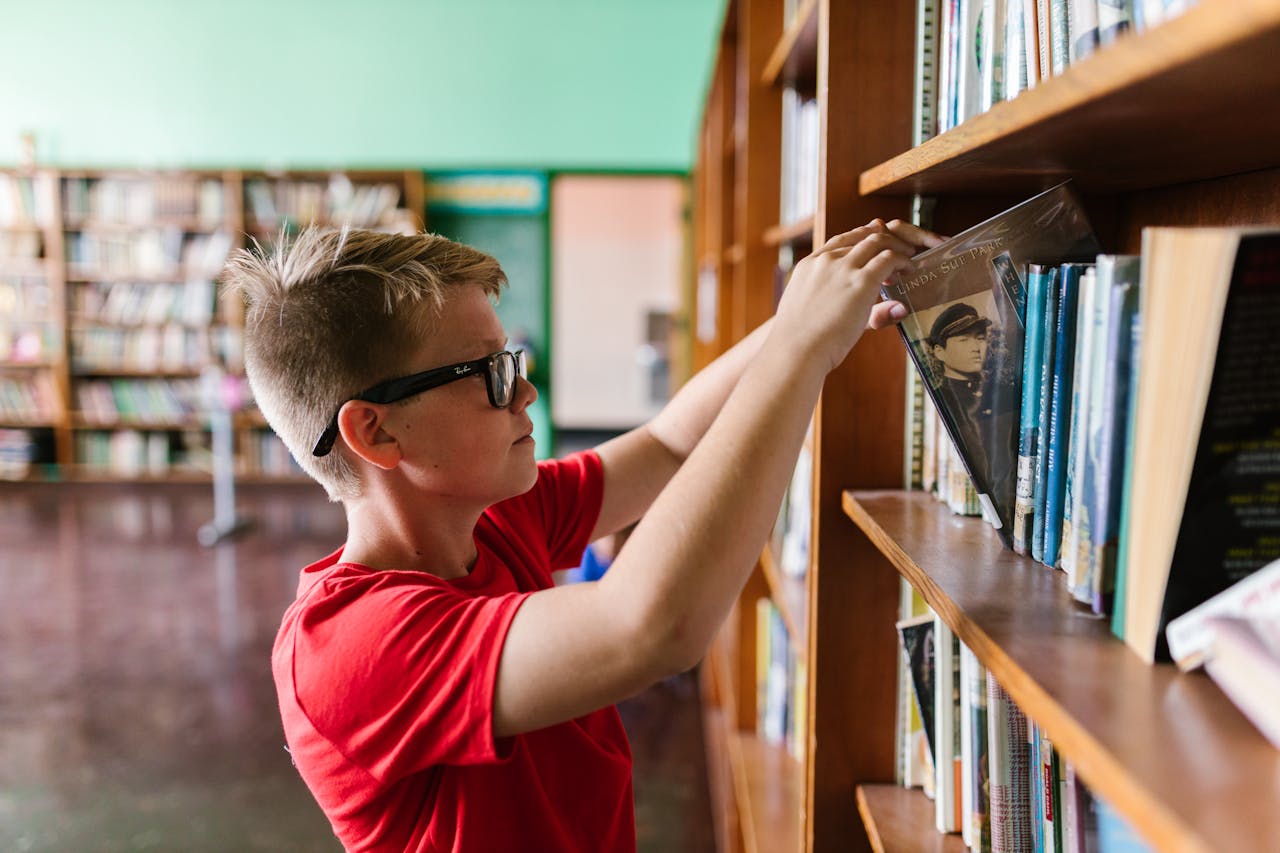
In our family, the library was always more than a room full of books. It was the first place my children learned to be curious on their own terms—to wander, to wonder, to follow an idea across shelves and subjects. It was also where they learned that there were stories like theirs, and stories entirely different, and that both belonged.
For myself as a child, libraries were a refuge. We couldn’t afford to buy as many books as I voraciously consumed. At home sometimes I read the dictionary because I lacked other material. But my school library was a magical place and the librarian was the magician, helping me find new and amazing windows into other worlds.
Across BC, that kind of space is vanishing. Librarians are being reassigned, laid off, or replaced with part-time clerks. Book budgets are slashed. The doors stay closed at recess and lunch. And what’s lost is far more than reading time.
Qualified teacher-librarians do more than shelve books. They teach critical literacy, research strategies, and digital navigation skills. They curate collections that reflect diverse cultures, genders, abilities, and family structures. They help students evaluate sources, challenge misinformation, and find their own voices in the process. For students with disabilities or trauma histories, libraries also offer low-stimulation environments where relationships grow slowly, on the learner’s terms. The presence of a skilled librarian has been linked to improved literacy scores, especially for students from low-income households. Libraries, in other words, are not neutral spaces. They are engines of inclusion—when staffed and supported.
When we remove qualified librarians, we remove the people who know how to turn a hesitant reader into a confident one. We remove the guides who help students write their first speech, explore their first protest, or find themselves in a memoir they never knew existed.
And we send a message—intentional or not—that deep literacy, and the freedom it affords, is a privilege for some, not a right for all.
We talk about digital literacy and media education as if they’re self-evident skills. They aren’t. They’re taught. And most often, they’re taught in the library, by someone who knows what’s at stake when a student can’t tell a source from a slogan, or a fact from a dogwhistle.
If we care about equity, about inclusion, about students growing up capable of thought and resistance and empathy, we cannot afford to lose our school libraries. And we cannot afford to lose the people who make them matter.