
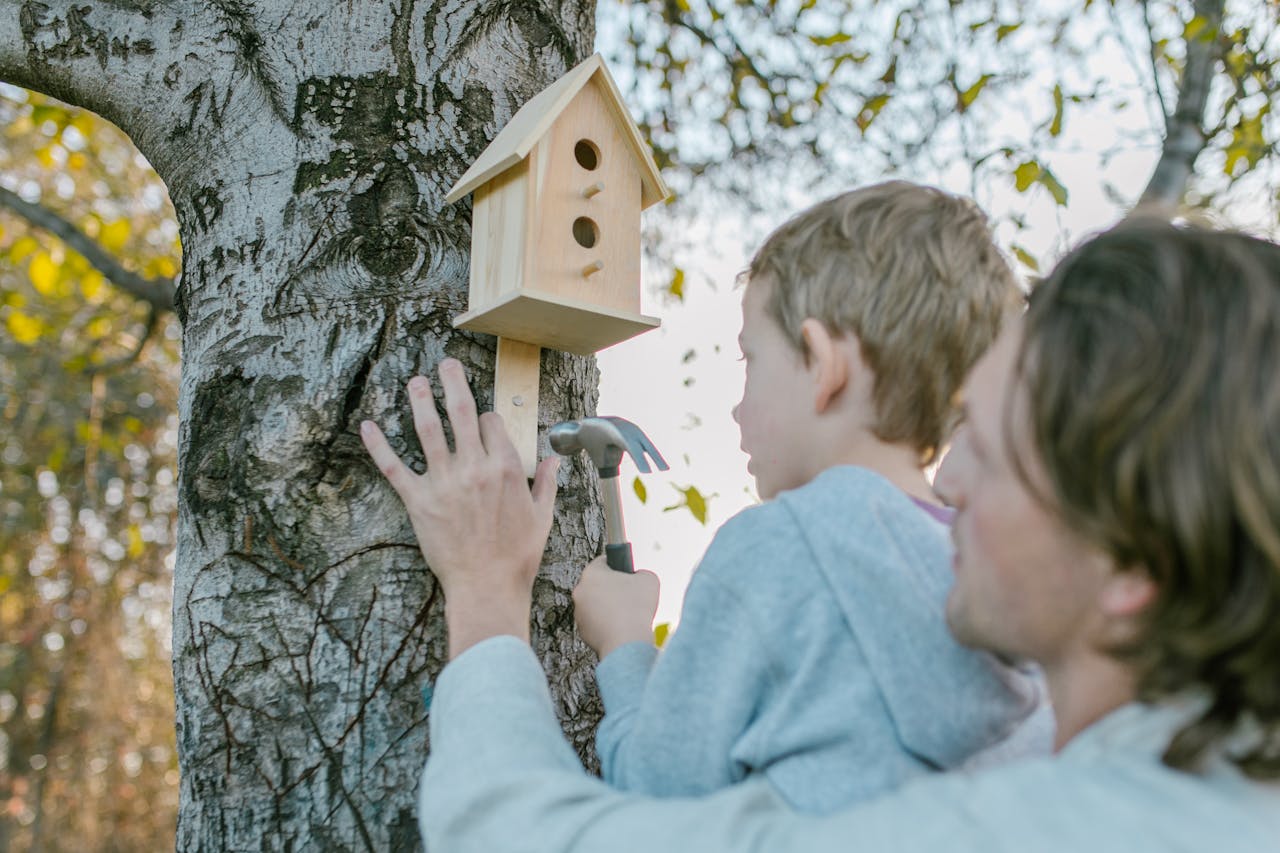
There’s a certain kind of kid—I know because I’m raising one—who can’t sit still for long. Not because they’re inattentive, but because their mind is racing ahead of their hands. These are the kids who learn by doing, who think best while moving, who understand how things work by taking them apart. Ask them to memorise a worksheet and they’ll stare out the window. Give them a soldering iron or a jigsaw and they come alive.
Hands-on learning isn’t a fallback for students who “don’t do well” academically. It’s a cognitive modality. And for many kids—especially neurodivergent ones—it’s the only entry point that feels intuitive, dignified, and grounded in reality. In shop class, ideas are made visible. Abstract concepts take form. Progress can be measured in millimetres and minutes, not just grades.
I’ve watched my child build something with their hands and, for the first time that day, hold their head up high. There’s no substitute for that kind of success.
Why hands-on learning works
Project-based, tactile learning engages the brain’s visuospatial, kinesthetic, and executive function systems all at once. When students build, wire, or construct, they’re activating working memory, planning and sequencing, motor coordination, and adaptive problem-solving. These are core academic and life skills—not side effects. Research shows that integrating technical and applied learning into the curriculum supports retention, autonomy, and long-term engagement with school. It also gives students a reason to care. Because when your project matters—when it does something or becomes something—you’re more likely to stick with it when it gets hard.
And yet, in a province grappling with both a housing crisis and a skilled labour shortage, shop classes are being cut. Equipment is aging. Safety standards go unfunded. In some schools, vocational education has been eliminated entirely—replaced by generic “applied design” blocks with little connection to real-world trades or tools.
This is short-sighted in every sense. We don’t need fewer students learning to weld, to wire a circuit, to understand torque or tolerances—we need more. The next generation of construction workers, plumbers, HVAC technicians, and machinists is sitting in our classrooms. But without exposure, mentorship, or opportunity, they may never know what they’re capable of.
Shop class isn’t a relic. It’s a lifeline—for students who learn best through action, for communities that rely on skilled trades, and for a province that cannot build the future without people who know how to make things. Let’s stop treating hands-on education as optional. It is essential. And it deserves the same respect—and investment—as every other part of the curriculum.